The Evolving Power Demands of Modern Camping
Thirty years ago, supplying an electrical hookup on a European campsite meant providing a 4-amp or 6-amp connection—just enough to power a modest caravan refrigerator and two reading lamps. Today, guests arrive with dual-zone climate units, induction cooktops, e-bikes, and mobile office setups.
If your electrical network has not been overhauled to handle modern diversity factors, you risk frequent circuit breaker trips, voltage drop over long runs, and accelerated thermal fatigue on underground cable runs. Addressing these demands requires a carefully structured distribution hierarchy.
Distribution Hierarchy: Feeder Pillars to Pitch Bollards
A campsite electrical grid should never run as an unbroken chain of daisy-chained bollards from one central board. Instead, best electrical practice divides the property into discrete feeder zones.
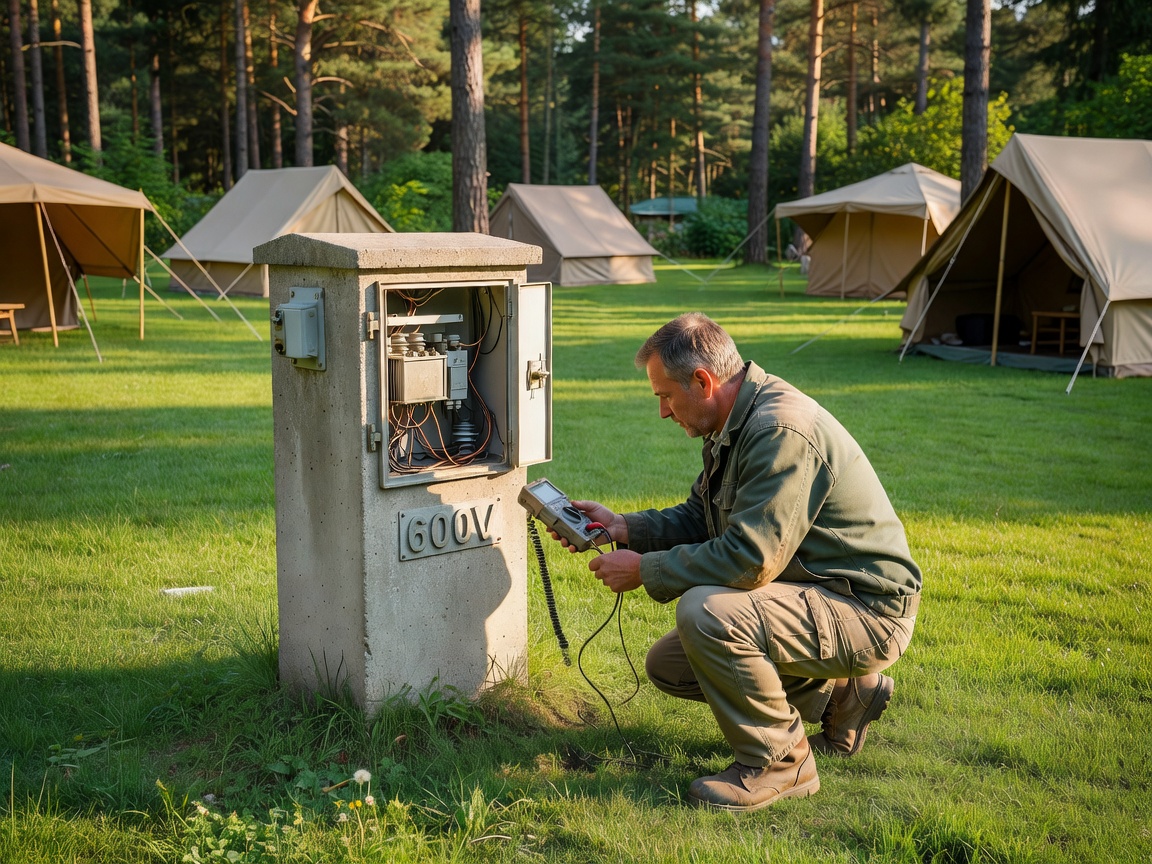
The main low-voltage switchgear feeds heavy armored cables out to weatherproof outdoor feeder pillars (sub-distribution boards) strategically positioned near pitch clusters. Each feeder pillar then supplies a small group of individual service bollards (typically four to six pitches per bollard). This topology limits the length of terminal circuits, minimizes voltage drop, and ensures an electrical fault at one caravan does not darken an entire row of adjacent pitches.
Professional Mandate & Safety Compliance
Outdoor electrical work in campgrounds involves elevated shock hazards due to damp terrain, temporary tent stakes, and variable guest equipment. All system designs, installations, and modifications must be performed by certified, licensed electrical professionals strictly adhering to regional regulations (such as IEC 60364-7-708 or national equivalents).
Pitch Bollard Specifications and CEE Standards
Throughout Europe, blue CEE 16A 2P+E (IEC 60309) sockets are the universally recognized standard for touring pitches. However, the internal components of the bollard matter just as much as the outer casing:
- Individual Circuit Protection: Every individual socket must have its own dedicated miniature circuit breaker (MCB) and residual current device (RCD) or combined RCBO with a maximum rated tripping current of 30mA.
- Mechanical Protection: Bollards must possess high IP ratings (minimum IP44, preferably IP54 or higher) and IK impact resistance ratings to withstand accidental contact with luggage, bicycles, or low-speed vehicles.
- Physical Separation from Water: If water taps and electric sockets share a multi-service bollard, ensure watertight internal barriers isolate the electrical compartment from plumbing fittings to prevent condensation or spray from bridging contacts.
Underground Trenching and Cable Protection
Because campsites regularly see tent pegs driven deep into the turf and heavy machinery moving across green spaces, underground cable installation demands strict physical depth standards.
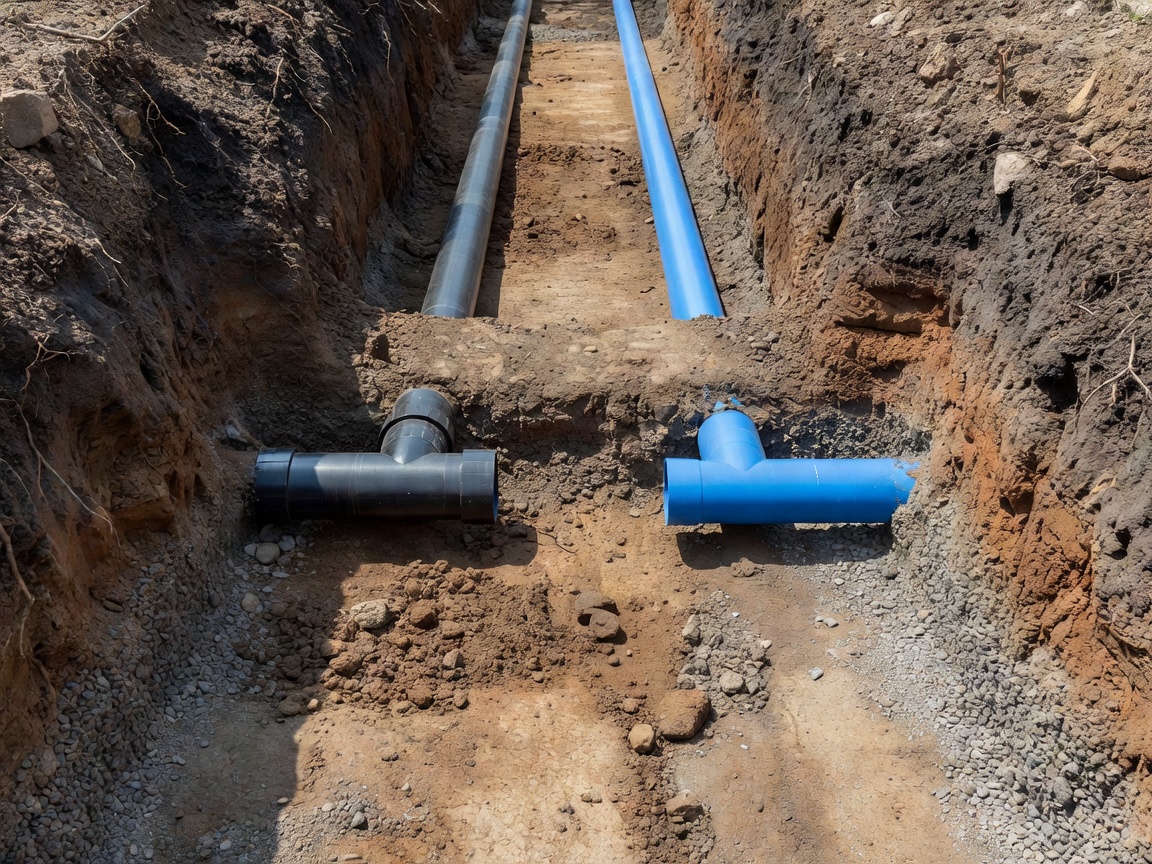
Steel-wire armored (SWA) cables must be laid in prepared sand beds at recognized depths (typically 600mm to 800mm below finished grade). A brightly colored warning tape must be installed in the backfill 200mm to 300mm above the cable to alert future excavators before any shovel strikes the conductor.
Electrical Infrastructure Audit Checklist
- Dedicated RCBOs: Every guest pitch outlet protected by an individual 30mA tripping device.
- Armored Cable Bedding: Conduits buried with appropriate warning tape and sand cushioning.
- Earth Electrode Testing: Regular earth loop impedance checks performed across all sub-distribution zones.
- Night Safety Lighting: Pathway and bollard guidance lights connected to separate circuits to ensure emergency visibility.
Accommodating Emerging EV Demands Sensibly
More guests are traveling to European campsites with plug-in hybrid or full-battery electric vehicles. Allowing visitors to charge high-draw EV batteries from standard 10A or 16A pitch bollards creates severe fire and overheating risks, as standard pitch wiring is not designed for continuous high-amperage draw over many hours.
The responsible solution is installing dedicated, purpose-built EV charging posts in designated parking areas near the main substation, equipped with dynamic load management that scales down charging when campsite restaurant and wash block loads peak.